I've decided to consolidate my blogging at Single Speed Seattle - which I've now expanded beyond bikes to cover what I've tried to write about at Corporate Tool: business hijinks, negotiation, legal silliness and office life.
Check out my latest post on tax policy there - as well as anything you might want to know about urban fixed gear bike commuting . . .
Friday, August 31, 2012


Sunday, July 22, 2012
How Not to Be a Trademark Bully
I've posted before about the way that many companies overreact to parody, trademark infringement and other "threats" to their brands. So I'm delighted to pass along this rare counter-example, courtesy of Popehat.
Proof that some companies can look at the big picture while still providing (appropriate) attention to IP issues.
Proof that some companies can look at the big picture while still providing (appropriate) attention to IP issues.
Friday, July 13, 2012
The Foolishness of Corporate Prosecutions
I recently did an op-ed for USA Today, in which I argued that aggressive prosecution of corporate executives is not sound policy. I was limited to 350 words, so I'm going to expand some on the thoughts here.
First of all, I don't think of this as a particularly controversial position. I've worked in the corporate world, in companies large and small, for nearly 20 years. I have a pretty good bead on the benefits and failings of corporate life (as often chronicled here). But it certainly brought out the torch-and-pitchfork crowd in the commentariat. You'd think I was advocating baby murder or slapping puppies.
MOST CORPORATE CRIME IS DIFFERENT. Apart from the most brazen and rare examples (e.g., embezzlement, lying to regulators), corporate crime is not the same as crimes such as murder, or armed robbery or rape. I'm not talking about outcomes, I'm talking about things like culpability (did someone have criminal intent) and even whether a crime was actually committed. It's not remotely as black and white as a crime where you've got a body at the end of a smoking gun.
People sputter about "corporate criminals,", but the vast majority of the time they are dealing with an outcome they don't like and groping for a criminal sanction. They want someone to PAY. But there's no body, no abused victim, no missing jewel cache. Just an outcome that feels wrong.
And it there's a chance it could be determined to BE wrong. There are thousands of federal statutes, applicable to business, that carry criminal sanctions. But these are almost never malum in se crimes, where any functioning member of society is expected to know right from wrong. To make matters worse, these malum prohibitum crimes are far more complex - and vague - than their counterparts in the non-business world. These aren't speed limits and DUI thresholds we're talking about. Which raises issue #2 . . .
ENFORCEMENT IS CAPRICIOUS. It's not that corporate executives can't be expected to comply with the law. The issue is vagueness and how the rules are applied. As criminal defense lawyer (and hater of the term "white collar crime") Scott Greenfield points out, corporate execs under investigation will find themselves subject to the whims of prosecutors - who almost never have business experience - who will try to fit otherwise routine corporate action (or inaction, or ministerial sloppiness) into the rubric of criminal offenses:
There are cases where individual corporate executives make discrete decisions to engage in crime, usually a deliberate fraud or bribery. But these cases are exceedingly rare. The reason the threat of prosecution doesn't work is because the executives aren't committing crimes at all, and certainly not in their own minds. They are making business decisions which, when held under a microscope and viewed by a kid from Justice who can only see black and white, has no clue how businesses function and no history in an industry, scrutinizes their decisions as to whether they're the decisions she would make. If not, then it's a Crime!
NO DETERRENT EFFECT - OR NOT THE ONE WE WANT. There's little surprise that capricious enforcement of vague crimes doesn't have a deterrent effect. And if we want to get to the deterrent, if we prosecute so aggressively that corporate execs are hiding from their own shadows, where does that get us? Do we want an American business culture where the Chief Compliance Officer reigns supreme, and the anal retentive obsessions of the grocery clerks takes precedence of moving fast, innovating and taking smart risks?
America has been the world's biggest, most successful economic engine for the last century. Our standard of living has risen to heights unrivaled anywhere. We continue to drive innovation for the rest of the planet. Prosecute aggressively enough, and we risk shutting that off - even as the rest of the world is sprinting to catch us. Or as Greenfield put it:
And if you're wondering where American jobs went, or why prices are out of control, or why products no longer work, or why there is no cure for your child's disease, consider the implications of people screaming criminal enterprise at corporations that may be far from perfect, but also far from criminal.
First of all, I don't think of this as a particularly controversial position. I've worked in the corporate world, in companies large and small, for nearly 20 years. I have a pretty good bead on the benefits and failings of corporate life (as often chronicled here). But it certainly brought out the torch-and-pitchfork crowd in the commentariat. You'd think I was advocating baby murder or slapping puppies.
MOST CORPORATE CRIME IS DIFFERENT. Apart from the most brazen and rare examples (e.g., embezzlement, lying to regulators), corporate crime is not the same as crimes such as murder, or armed robbery or rape. I'm not talking about outcomes, I'm talking about things like culpability (did someone have criminal intent) and even whether a crime was actually committed. It's not remotely as black and white as a crime where you've got a body at the end of a smoking gun.
People sputter about "corporate criminals,", but the vast majority of the time they are dealing with an outcome they don't like and groping for a criminal sanction. They want someone to PAY. But there's no body, no abused victim, no missing jewel cache. Just an outcome that feels wrong.
And it there's a chance it could be determined to BE wrong. There are thousands of federal statutes, applicable to business, that carry criminal sanctions. But these are almost never malum in se crimes, where any functioning member of society is expected to know right from wrong. To make matters worse, these malum prohibitum crimes are far more complex - and vague - than their counterparts in the non-business world. These aren't speed limits and DUI thresholds we're talking about. Which raises issue #2 . . .
ENFORCEMENT IS CAPRICIOUS. It's not that corporate executives can't be expected to comply with the law. The issue is vagueness and how the rules are applied. As criminal defense lawyer (and hater of the term "white collar crime") Scott Greenfield points out, corporate execs under investigation will find themselves subject to the whims of prosecutors - who almost never have business experience - who will try to fit otherwise routine corporate action (or inaction, or ministerial sloppiness) into the rubric of criminal offenses:
There are cases where individual corporate executives make discrete decisions to engage in crime, usually a deliberate fraud or bribery. But these cases are exceedingly rare. The reason the threat of prosecution doesn't work is because the executives aren't committing crimes at all, and certainly not in their own minds. They are making business decisions which, when held under a microscope and viewed by a kid from Justice who can only see black and white, has no clue how businesses function and no history in an industry, scrutinizes their decisions as to whether they're the decisions she would make. If not, then it's a Crime!
NO DETERRENT EFFECT - OR NOT THE ONE WE WANT. There's little surprise that capricious enforcement of vague crimes doesn't have a deterrent effect. And if we want to get to the deterrent, if we prosecute so aggressively that corporate execs are hiding from their own shadows, where does that get us? Do we want an American business culture where the Chief Compliance Officer reigns supreme, and the anal retentive obsessions of the grocery clerks takes precedence of moving fast, innovating and taking smart risks?
America has been the world's biggest, most successful economic engine for the last century. Our standard of living has risen to heights unrivaled anywhere. We continue to drive innovation for the rest of the planet. Prosecute aggressively enough, and we risk shutting that off - even as the rest of the world is sprinting to catch us. Or as Greenfield put it:
And if you're wondering where American jobs went, or why prices are out of control, or why products no longer work, or why there is no cure for your child's disease, consider the implications of people screaming criminal enterprise at corporations that may be far from perfect, but also far from criminal.
Monday, July 02, 2012
Book Review: "A Lawyer's Guide to Getting a Corporate Legal Position In-House"
When David Parnell - co-founder of NY-based legal recruiting firm Edward, Anthony & Steele - asked me to review his new book, "A Lawyer's Guide to Getting a Corporate Legal Position In-House," I was intrigued. I guessed it wouldn't endorse the method I used as a third-year lawyer to get my first in-house position back in 1996 - answering a "help wanted" ad in the legal newspaper - but I was curious to see if it would address some of the missteps I've seen wannabe in-house attorneys make since.
And it does. Parnell's book is an excellent resource for attorneys with 2-7 years of experience looking to move in-house. Here are some of the areas that stand out:
And it does. Parnell's book is an excellent resource for attorneys with 2-7 years of experience looking to move in-house. Here are some of the areas that stand out:
- A Candid Assessment of In-House Work. Parnell's focus in on larger organizations, which is the likely landing spot in-house for more junior attorneys. And he doesn't sugar-coat the reality of the work: There's no guarantee that the hours will be softer, and there's a strong likelihood that the entry-level work in a large legal department will be less interesting (and repetitive) than the varied deal flow at a law firm. Parnell also takes pains to point out just how competitive it is to get in-house positions.
- A Tactical Approach. When hiring for in-house counsel, I can't tell you how many poorly-thought-out, scattershot approaches I've seen by candidates. Parnell lays out a super-methodical approach to seeking in-house work, with a focus on identifying positions that haven't been posted yet. He takes it down to a detailed, campaign level, complete with creating a "funnel" of 100 targets, sending tailored correspondence and scheduling emails and phone calls. That kind of tactical focus and plain grunt work is necessary if you want to maximize your chances of landing an in-house job. It's a ton of effort, but it's very, very effective - largely because so few candidates do it.
- A Detailed Interview Strategy. Parnell recommends a lot of interview prep, to the point of writing answers to likely questions out. This is sound advice, and too often observed in the breach. Parnell also recommends doing background research on the potential employer. This is a point that needs greater emphasis; I would expect anyone interviewing for a legal position to have an in-depth view of my business and its competitive space, and be able to ask intelligent questions about it. Again, an area that is too often shined on by candidates. The book also includes an excellent and highly-detailed section on negotiating compensation.
There are also a couple of areas that I would caution readers about:
- It's Not for All Attorneys. Parnell's book is, as mentioned, focused on attorneys with about 2-7 years experience seeking jobs in large organizations. This makes sense, as that's the deepest pool for junior attorneys to fish in. However, if you have more experience, or are applying for jobs in smaller organizations, your approach will need to change a bit. Those in such a position could still benefit greatly from Parnell's detailed "campaign" approach to contacting potential employers. But it's important to go much deeper - to research each company you are approaching and send correspondence that directly addresses its needs and how you can help. To do this properly, you probably need to go after a smaller pool than the 100 employers Parnell recommends for starting a campaign. And it's a lot of work. But I guarantee you it's far, far more effective than mass-mailing a bunch of generic cover letters and resumes.
- Interviewing Psychology. Parnell is into linguistics and psychology, and he spends a fair bit of time in the book exploring the psychology of interviewing: first impressions, matching and mirroring, conforming, etc. This is all important stuff to know, but I would go further than Parnell does in cautioning candidates about the dangers of artificially changing their personalities in interviews. The people who need the most help in these areas are also the likeliest to screw up by actively trying to "not be themselves" in an interview. I've seen this happen a number of times, and it's always a train wreck. In-house employers tend to have very finely-tuned bullshit detectors. Be prepared - be uber prepared. But be yourself (or, at most, a somewhat-friendlier version of yourself). Attempting a psychological makeover in an interview is far likelier to backfire than yield any real benefits.
And yes, the book is published by the ABA, so it's not much to look at. And it costs $100 ($75 for ABA members). But this is your career we're talking about here. There is a gold mine of information in the book for any biglaw associate with serious dreams of moving in-house. It provides a tactical roadmap to maximize the chances of finding a position, and contains enough truth-telling about the corporate world that some readers will decide that staying in a firm is just fine. And even those looking at smaller companies or specialized positions would benefit from Parnell's advice about running a job-acquisition campaign and how to prep for interviews and comp discussions.
Friday, June 22, 2012
Domain Madness
There's a whole new set of Internet generic top level domains (TLDs) coming. Not content with .com, .org and the lightly-used .biz and .info (to say nothing of all the country-specific TLDs), ICANN has expanded the TLD universe to, well, just about anything.
.lol? Check. .law? Bingo. For the price of several minutes of prime time TV advertising, anyone can get a TLD for anything. And perusing the list of applications looks like nothing so much as a wireless spectrum auction - strategic bidders (like Google), acquisitive upstarts and a host of speculators.
Except that wireless spectrum supports a cash-flowing business model and is scarce. TLDs are neither; they have all the utility of vanity license plates. Specific domains are getting less important with the growth of the social web and improvements in search algorithms. Most sites won't feel compelled to buy up their domain on every TLD. For Google and its ilk, buying a bunch of TLDs be justified as marketing, or research, or whatever - it's pure option value. But for speculators? It seems the dream of domain riches dies hard.
.lol? Check. .law? Bingo. For the price of several minutes of prime time TV advertising, anyone can get a TLD for anything. And perusing the list of applications looks like nothing so much as a wireless spectrum auction - strategic bidders (like Google), acquisitive upstarts and a host of speculators.
Except that wireless spectrum supports a cash-flowing business model and is scarce. TLDs are neither; they have all the utility of vanity license plates. Specific domains are getting less important with the growth of the social web and improvements in search algorithms. Most sites won't feel compelled to buy up their domain on every TLD. For Google and its ilk, buying a bunch of TLDs be justified as marketing, or research, or whatever - it's pure option value. But for speculators? It seems the dream of domain riches dies hard.
Monday, April 09, 2012
More Thoughts on the GC Role
Two articles piqued my interest today: The first, from the Economist, weighs in on the increased sway that GCs have in the world of Sarbanes-Oxley. The second, from Corporate Counsel Magazine, features an interview with former GE GC Ben Heineman, Jr. Several observations:
- The theme of power shifting to the in-house legal leader, and the need for greater guidance and statesmanship from the GC feels very real to me. However, in talking with colleagues, recruiters and others dealing with in-house positions, this hasn't set in everywhere. I continue to see situations where the GC reports to the CFO, for example.
- Walking the line between being a partner to the business and its guardian is the trickiest part of the job, and the one where the GC can add the most value. But it requires knowing the business inside and out, and being willing to take smart risks whenever they are outweighed by opportunity. This is a two-handed benefit - it makes the GC the partner of the business, and it provides him or her the credibility to take a stand when a business initiative must be shut down or modified.
- I'm with Heineman on compliance officers. As I've pointed out before, I'd be nobody's choice for a compliance officer; I'm not nearly risk-adverse enough. But the idea of having a compliance officer who DOESN'T report to the GC is a shockingly bad one. Compliance is an important part of the legal work facing a company, but it's necessarily narrow. And for too many of those handling the hammer of "compliance", every potential risk can look like a nail. Far better, then, for the GC - the one executive in the company equipped to sort "compliance" from "bona fide risk worth taking" - to make the final call.
Thursday, March 15, 2012
The Time I Unleashed Marc Randazza on the ABA
We were talking in the office the other day about memorable legal CLE panels, and how few and far between they are. The standard is so low, so filled with lawyers wringing their hands and droning their way through word-dense powerpoint slides, that standing out should be relatively easy.
I've tried to do that in the presentations I give, living by the rule of never reading off of powerpoint slides and keeping things as lively as possible. But the one presentation that lives in memory (and probably infamy, for some) is a panel I put together a couple of years ago for the ABA's Business Law Section annual meeting.
The ABA Business Law Section is a big group, and it deals with many important legal issues. But no one would confuse your average Business Law Section presentation with anything resembling entertainment.
So naturally, I put Marc Randazza on my panel (which was titled something like "Someone Online Hates You"). Randazza is a first amendment lawyer extraordinare. He has dealt with many of the most interesting cases at the intersection of the First Amendment and the online world - a prickly professor's defamation lawsuit against Above the Law, Glenn Beck's futile UDRP case, and of course, the Righthaven beatdown. Just to name a few.
Despite being somewhat under the weather, Marc put on a helluva performance, getting off riffs, one-liners and anecdotes - a fair number of which were seriously off-color - that had the staid Business Law Section crowd howling in laughter. He stole the show. The best part came when I got the evaluations a few weeks later. It was a binary response: From most, all 5's, raving about how Marc Randazza was the best presenter they'd ever seen at a legal event. And from a few - and you know the tight-lipped type - comments along the lines of how offensive Marc Randazza was, and how they couldn't believe such foul-mouthed comments would be allowed at an ABA event.
As I've always maintained, if you're not pissing a few people off, you're doing something wrong.
I gotten to know Marc better since then; he's helped me out with a number of issues and is currently representing me in the Rakofsky v. the Internet debacle. Besides being seriously funny, whip-smart and irreverent, he's a helluva decent guy.
A helluva decent guy with no tolerance for censorious thugs, of course.
Anyway, I need to find another opportunity to spring Marc Randazza on a group of unsuspecting lawyers. Maybe the ABA Ethics 20/20 panel would like to hear Marc's perspective on how to regulate lawyer advertising . . .
I've tried to do that in the presentations I give, living by the rule of never reading off of powerpoint slides and keeping things as lively as possible. But the one presentation that lives in memory (and probably infamy, for some) is a panel I put together a couple of years ago for the ABA's Business Law Section annual meeting.
The ABA Business Law Section is a big group, and it deals with many important legal issues. But no one would confuse your average Business Law Section presentation with anything resembling entertainment.
So naturally, I put Marc Randazza on my panel (which was titled something like "Someone Online Hates You"). Randazza is a first amendment lawyer extraordinare. He has dealt with many of the most interesting cases at the intersection of the First Amendment and the online world - a prickly professor's defamation lawsuit against Above the Law, Glenn Beck's futile UDRP case, and of course, the Righthaven beatdown. Just to name a few.
Despite being somewhat under the weather, Marc put on a helluva performance, getting off riffs, one-liners and anecdotes - a fair number of which were seriously off-color - that had the staid Business Law Section crowd howling in laughter. He stole the show. The best part came when I got the evaluations a few weeks later. It was a binary response: From most, all 5's, raving about how Marc Randazza was the best presenter they'd ever seen at a legal event. And from a few - and you know the tight-lipped type - comments along the lines of how offensive Marc Randazza was, and how they couldn't believe such foul-mouthed comments would be allowed at an ABA event.
As I've always maintained, if you're not pissing a few people off, you're doing something wrong.
I gotten to know Marc better since then; he's helped me out with a number of issues and is currently representing me in the Rakofsky v. the Internet debacle. Besides being seriously funny, whip-smart and irreverent, he's a helluva decent guy.
A helluva decent guy with no tolerance for censorious thugs, of course.
Anyway, I need to find another opportunity to spring Marc Randazza on a group of unsuspecting lawyers. Maybe the ABA Ethics 20/20 panel would like to hear Marc's perspective on how to regulate lawyer advertising . . .
Friday, March 09, 2012
The Empty Threats of Trademark Bullying
Two instructive examples of trademark bullying this week:
The first comes from, of all people, the organizers of the South By Southwest music festival. Lawyers for SXSW sent a cease and desist letter to the makers of "lastsx.sw", an app designed to help users track down bands they'd like to hear at the festival.
The second comes from serial trademark abuser Louis Vuitton group, which via its lawyers snottily objected to the marketing materials prepared by an intellectual property group at the University of Pennsylvania law school for a symposium on "fashion law." Here's the (rather cleverly-done) piece that produced so many wadded panties at LVG legal:

The reactions of each group to this bullying will tell you a little bit about what's really behind these threats. The young tech guys behind the app caved; Penn Law School sent back a sharply-written reply to LVG that might be loosely translated as "get bent."
This difference comes not only from the fact that Penn Law School is a) amply able to defend itself and b) full-to-bursting with lawyers, but also from a little secret good lawyers know: that the vast majority of the time, threats like this are nothing more than empty bluster. The attorneys writing these frothing missives have no intention of making good on them.
Or to put in the parlance of the home of SXSW - they're all hat and no cattle. They just want to scare you, to intimidate you into agreeing to their demands. In the case of lastsx.sw, mission accomplished.
Most good attorneys I know will rarely send threatening letters. They reserve them only for cases where there IS a real issue, and they and their client fully intend to follow through with a lawsuit. Or they'll just file the lawsuit and then make their demand. Unfortunately, there are many attorneys out there who can't control their clients, or who value the billable opportunity more highly than the overall outcome to their client, or who have found that the return on their empty threats is good enough to justify the cost to their reputations.
In my business, I deal with bullying attempts like this on a near-daily basis. I've been threatened with a lawsuit over 300 times in the last few years. I've had claims made that ignore the First Amendment or other laws. Claims that flat-out make laws up. Claims of butthurt masquerading as defamation. And claims, like these two, that argue for outrageous extensions of copyright or trademark law.
I've denied every single one of them. Every attorney who wanted a profile, client review or rating removed and threatened a lawsuit to get this result got the same answer: No.
How many of them sued after getting this disappointing answer? Zero.
Some attorneys just can't help but try to throw their weight around. But that doesn't mean you need to take them seriously when you're operating within your rights.
Friday, February 03, 2012
The Permission Culture
Being the general counsel for the largest online rater and reviewer of lawyers, I get my share of heated correspondence from lawyers. And one common question is why we didn't ask permission before posting an attorney's licensing details online.
It's a vexing question. Not because the substance of the question is difficult to answer - rather, it's difficult to answer in a way that is not overly rude and/or condescending. Why? Because it should be blindingly obvious that we don't need their permission.
Asking for permission implies the conferring of a right not otherwise present. Decorum also demands that it be limited to those areas where one plans on honoring the denial of permission. As we have a clear First Amendment right to publish, and no intention of only publishing material for which consent has been granted, it would be both pointless and in bad form for us to ask for permission.
I wonder, however - as I see the latest round of the NFL trying to prevent use of the term "Super Bowl"without permission (note: I did not obtain, nor ask for, permission to refer to the SUPER BOWL). Super Bowl, Super Bowl, Super Bowl . . .
Anyway, where was I? Oh, yes - this NFL silliness (SUPER BOWL!!!), along with the consistent drumbeat I hear from lawyers over permission, raises the question of whether we lawyers have too strong of a bias for permission. Just as lawyerly training can lead to a blinkered desire to mitigate every risk, regardless of cost or lost opportunity, does our reliance on case law and statute tend to immobilize us from taking action unless there is clear precedent saying "yes, really, it's OK?" To think that we can't do anything out of the ordinary without permission? My experience would say that it does.
This is a problem, because it leads to situations like the ridiculous demands for permission that I get, or the ludicrous position taken by the NFL and other trademark or copyright holders that even clear-cut cases of fair use are infringing without permission.
A culture of permission-only is a poorer culture all around. And it's bad for lawyers and their clients, as asking for permission in cases where it's not required leads to confusion and missed opportunities. Let's limit permission to its intended uses: when we're seeking a dispensation (by asking for a right), or granting one (by letting someone else decide whether we get to exercise a right we already have).
It's a vexing question. Not because the substance of the question is difficult to answer - rather, it's difficult to answer in a way that is not overly rude and/or condescending. Why? Because it should be blindingly obvious that we don't need their permission.
Asking for permission implies the conferring of a right not otherwise present. Decorum also demands that it be limited to those areas where one plans on honoring the denial of permission. As we have a clear First Amendment right to publish, and no intention of only publishing material for which consent has been granted, it would be both pointless and in bad form for us to ask for permission.
I wonder, however - as I see the latest round of the NFL trying to prevent use of the term "Super Bowl"without permission (note: I did not obtain, nor ask for, permission to refer to the SUPER BOWL). Super Bowl, Super Bowl, Super Bowl . . .
Anyway, where was I? Oh, yes - this NFL silliness (SUPER BOWL!!!), along with the consistent drumbeat I hear from lawyers over permission, raises the question of whether we lawyers have too strong of a bias for permission. Just as lawyerly training can lead to a blinkered desire to mitigate every risk, regardless of cost or lost opportunity, does our reliance on case law and statute tend to immobilize us from taking action unless there is clear precedent saying "yes, really, it's OK?" To think that we can't do anything out of the ordinary without permission? My experience would say that it does.
This is a problem, because it leads to situations like the ridiculous demands for permission that I get, or the ludicrous position taken by the NFL and other trademark or copyright holders that even clear-cut cases of fair use are infringing without permission.
A culture of permission-only is a poorer culture all around. And it's bad for lawyers and their clients, as asking for permission in cases where it's not required leads to confusion and missed opportunities. Let's limit permission to its intended uses: when we're seeking a dispensation (by asking for a right), or granting one (by letting someone else decide whether we get to exercise a right we already have).
Wednesday, December 21, 2011
AT&T - T-Mobile Final Thoughts
Monday night, AT&T and TMO announced their $39B merger was dead. The only surprise was that they did it so quickly; as I've written before, there was a real danger that egos would prevail and AT&T would distract itself by fighting a losing battle with the regulators rather than turning its attention to competing with Verizon.
I went on CNBC's Squawk Box Tuesday morning (sorry; no video link) to offer my thoughts on whether AT&T had made a bad bet. I'll repeat and expand what I said there: It was a risky bet - which is why TMO, advised by my former counsel at Wachtell, insisted on the mother of all break-up fees. But it was a bet worth taking.
The good news for AT&T is that they aren't chasing here. They can now turn to other options, whether it's acquiring DISH, buying spectrum or capacity from Clearwire, or doubling down on a wi-fi offload strategy. None are ideal, but they've got to play the cards they were dealt.
Another topic that came up in my interview yesterday was whether scuttling this deal was good for consumers. It's easy to see why it would be; TMO gets to keep playing to the low end, and there should be more price competition. But that's also a facile and short-sighted point of view.
This timely WSJ article today touches on, at a high level, some of the fundamental economic headwinds that face U.S. wireless carriers. It's a vast country, and providing the coverage, capacity and data speeds that consumers want is incredibly costly. Carriers spent $25 billion on their networks last year. Only AT&T and Verizon got a return on capital. Think about that, and what it means over time for consumers. We're paying for marginal price competition today with hobbled companies and under-investment tomorrow. A cash-losing Sprint or T-Mobile can't innovate, can't bridge the "last mile" or the "digital divide", and will ultimately fail - leaving the monopoly or duopoly DC is so fearful of - if they can't afford to invest capital in their network.
So no, the FCC and DOJ did consumers no favors long-term in preventing this deal. It's time they updated the tools in their "preserving competition" toolbox for the reality of today's wireless industry.
I went on CNBC's Squawk Box Tuesday morning (sorry; no video link) to offer my thoughts on whether AT&T had made a bad bet. I'll repeat and expand what I said there: It was a risky bet - which is why TMO, advised by my former counsel at Wachtell, insisted on the mother of all break-up fees. But it was a bet worth taking.
The good news for AT&T is that they aren't chasing here. They can now turn to other options, whether it's acquiring DISH, buying spectrum or capacity from Clearwire, or doubling down on a wi-fi offload strategy. None are ideal, but they've got to play the cards they were dealt.
Another topic that came up in my interview yesterday was whether scuttling this deal was good for consumers. It's easy to see why it would be; TMO gets to keep playing to the low end, and there should be more price competition. But that's also a facile and short-sighted point of view.
This timely WSJ article today touches on, at a high level, some of the fundamental economic headwinds that face U.S. wireless carriers. It's a vast country, and providing the coverage, capacity and data speeds that consumers want is incredibly costly. Carriers spent $25 billion on their networks last year. Only AT&T and Verizon got a return on capital. Think about that, and what it means over time for consumers. We're paying for marginal price competition today with hobbled companies and under-investment tomorrow. A cash-losing Sprint or T-Mobile can't innovate, can't bridge the "last mile" or the "digital divide", and will ultimately fail - leaving the monopoly or duopoly DC is so fearful of - if they can't afford to invest capital in their network.
So no, the FCC and DOJ did consumers no favors long-term in preventing this deal. It's time they updated the tools in their "preserving competition" toolbox for the reality of today's wireless industry.
Monday, December 12, 2011
AT&T & T-Mobile Reaching the Final Act
There was a terrific piece in the Washington Post at the end of last week, detailing AT&T's lobbying strategy and approach to win approval of its $39B acquisition of T-Mobile. It's well worth a read, detailing as it does the combination of hubris and overreach that may have sunk the deal's chances.
The acquisition was a risky bet to begin with, but one takeaway for would-be acquirers must be this: If you're going to tout social benefits (in this case, the creation of 100,000 new jobs) in your lobbying efforts, be prepared to back up your claim with the solidest of solid analysis.
Because if you can't, then the rest of your arguments - and make no mistake, AT&T had several good ones re the benefits of this merger - are going to suffer badly by association. You'll have just handed those opposing your deal the club with which to smash your head in.
And today, AT&T has joined the DOJ in asking for a stay of the antitrust trial it had been so ardently pushing forward. This no doubt foretells the deal being scuttled or significantly re-arranged.
Here's one vote for the former - I'd much rather see AT&T in full-throated competition with Verizon than distracting itself trying to put together a less-than-optimal deal.
The acquisition was a risky bet to begin with, but one takeaway for would-be acquirers must be this: If you're going to tout social benefits (in this case, the creation of 100,000 new jobs) in your lobbying efforts, be prepared to back up your claim with the solidest of solid analysis.
Because if you can't, then the rest of your arguments - and make no mistake, AT&T had several good ones re the benefits of this merger - are going to suffer badly by association. You'll have just handed those opposing your deal the club with which to smash your head in.
And today, AT&T has joined the DOJ in asking for a stay of the antitrust trial it had been so ardently pushing forward. This no doubt foretells the deal being scuttled or significantly re-arranged.
Here's one vote for the former - I'd much rather see AT&T in full-throated competition with Verizon than distracting itself trying to put together a less-than-optimal deal.
Friday, November 25, 2011
AT&T, T-Mobile & Opportunity Cost
AT&T's acquisition of T-mobile is on the rocks, and
it looks like things are going to get uglier before everything settles
out. As I mentioned in this CNN article,
I'm convinced the deal is dead. My belief isn't driven by any particular
dislike for this deal; in fact, I think it makes a lot of sense. But it was a big gamble that regulatory
approval would come through, and sometimes things don't work out.
The problem here is moving on crisply. A major consolidating transaction is
distracting enough; but trying to push one through the regulatory bog AT&T
is facing? The DOJ has sued to block the
merger. The FCC has referred the matter
to an administrative hearing - a near-unheard of event. AT&T has responded by taking its ball and going home,
pulling back its transfer application in the hopes that it can refile once it
works things out with DOJ. All of this
spells additional delay and uncertainty.
Neither AT&T or T-Mobile can move forward fully until the merger is
resolved, one way or the other. In the
meantime, Verizon can keep taking market share steadfastly, not burdened down by
distracting strategic considerations.
Thursday, October 27, 2011
Should Legal Report to PR?
OK, it sounds ridiculous, but consider: Any company of size employs a public relations staff. It's how you acquire, manage and - hopefully - shape earned media. Public relations is taken very seriously, and invested in accordingly. A savvy PR staff can generate an outsized return on an investment in relationships and managing the company's image in the press.
Why then, do companies - like Sony Ericcson - continue to allow their legal departments to undermine that PR work?
Imagine the conversation if the Sony Ericcson legal group reported to PR:
PR: Wait, you want to do what?
Legal: There's a guy running a blog that has the name of one of our products in it. And get this - the domain he's using has our product name in it! We can't have that. We're going to threaten him with a UDRP action unless he shutters the blog and hands the domain to us.
PR: Haven't we talked about this? If there's someone hating on us, it's usually best to just ignore them? You know, Streisand Effect?
Legal: Oh, he's not a hater. It's a fan site.
PR: You want to take down a fan site? Someone is writing nice things about us for free and you want to stop them?
. . . you do know that we spend nearly $1 billion a year on advertising, right?
. . . and that this blogger is giving us free advertising?
. . . and that when he's forced to shut down he, and the 4chans and TechDirts of the world, are going to start saying all sorts of nasty things about us and how heavy-handed we are?
. . . which is pretty much the exact opposite of this department's primary goal?
But you're the lawyer - there must be a very good reason for going after this fan. Is he confusing lots of our customers?
Legal: No, it's clearly a fan site. But he's got an affiliate link where people can buy our products.
PR: Uh . . . we're kind of in the product selling business. So his site must be messing with our SEO, outranking our sites on Google?
Legal: Not yet, but it's a .net domain.
PR: It's a .net domain? You do know that a .net domain is the internet equivalent of second-hand store on a back street, right?
Legal: Look, the issue is that there's a chance that this use of our product name could dilute our brand and cause us to lose the trademarked name of the product. We've got to defend our trademark!
PR: OK. So stacked against the 100% chance that your letter will cost us - at a minimum - hundreds of thousands of dollars in negative publicity, what's the risk that this site being out there causes us to lose our trademark?
Legal: Oh, that would never happen. But it sets a bad precedent.
PR: [facepalm]
Why then, do companies - like Sony Ericcson - continue to allow their legal departments to undermine that PR work?
Imagine the conversation if the Sony Ericcson legal group reported to PR:
PR: Wait, you want to do what?
Legal: There's a guy running a blog that has the name of one of our products in it. And get this - the domain he's using has our product name in it! We can't have that. We're going to threaten him with a UDRP action unless he shutters the blog and hands the domain to us.
PR: Haven't we talked about this? If there's someone hating on us, it's usually best to just ignore them? You know, Streisand Effect?
Legal: Oh, he's not a hater. It's a fan site.
PR: You want to take down a fan site? Someone is writing nice things about us for free and you want to stop them?
. . . you do know that we spend nearly $1 billion a year on advertising, right?
. . . and that this blogger is giving us free advertising?
. . . and that when he's forced to shut down he, and the 4chans and TechDirts of the world, are going to start saying all sorts of nasty things about us and how heavy-handed we are?
. . . which is pretty much the exact opposite of this department's primary goal?
But you're the lawyer - there must be a very good reason for going after this fan. Is he confusing lots of our customers?
Legal: No, it's clearly a fan site. But he's got an affiliate link where people can buy our products.
PR: Uh . . . we're kind of in the product selling business. So his site must be messing with our SEO, outranking our sites on Google?
Legal: Not yet, but it's a .net domain.
PR: It's a .net domain? You do know that a .net domain is the internet equivalent of second-hand store on a back street, right?
Legal: Look, the issue is that there's a chance that this use of our product name could dilute our brand and cause us to lose the trademarked name of the product. We've got to defend our trademark!
PR: OK. So stacked against the 100% chance that your letter will cost us - at a minimum - hundreds of thousands of dollars in negative publicity, what's the risk that this site being out there causes us to lose our trademark?
Legal: Oh, that would never happen. But it sets a bad precedent.
PR: [facepalm]
Monday, October 17, 2011
The Black Hole of Customer Complaints
The Bizzle writes about the role of corporate counsel in occasionally having to deal with real live customer complaints. I had to chuckle; there is much to recognize there.
When I was GC of a regional wireless company, I was deemed the "black hole" of customer complaints, the place that those too crazy or persistent for even our executive escalation team to handle would be sent. Like the guy who would send 27 page faxes to us every day, copying the regulatory agencies and every government official he could think of. Or the customer who sent in a package containing his bill (crumpled up into a tight little ball), a foot-long dowel and a tube of KY Jelly.
What I found was that - much like the Bizzle's experience - for the vast majority of these complaints it was a matter of listening. Listening, because there was nothing else I could offer. Any complaints amenable to resolution would have been dealt with long before they reached me. So I listened, tried not to argue too much, and told them "no". "No," over and over again. No, we would not fundamentally change our business processes. No, we would not pay them millions of dollars for a perceived slight. No, we would not humbly and abjectly go out of business.
And - most importantly - No, there is no one to escalate to beyond me.
These complaints were stuck beyond the event horizon of my "Office of the General Counsel" black hole. They could not go forward and vent their spleen to our CEO, nor backward to make another run at our customer care staff. All further communication would be to me, and me alone. Eventually, they would exhaust themselves and move on to whatever was next in their lives.
It was a clean process, if not always the best use of a GCs time. It required listening, but never for too long; the judicious use of calendar management and setting expectations that I only had time to talk for so long at a spell. But it was a far better process than having the CEO take these calls, and it provided some comfort that if one of these people had a legitimate claim, it would find the legal department while something short of a lawsuit could still make things right.
Unsurprisingly, this is a big part of my current role. Being in the business of publishing information, ratings and reviews of attorneys, we field a number of complaints from those we profile. This is not about paying customer escalations, but rather all about unhappiness and control from a handful of those we've published information about. Many of those have been interesting conversations, and some have even led to changes in our operations. But the vast bulk of them involve me listening and saying that oh-so-familiar word: "No." And because these are attorneys, I often must follow my "no" with an explanation of why suing us would be a bad idea. I have anecdotes and correspondence from these conversations that would fill a book. But that, readers, will have to wait for another day.
When I was GC of a regional wireless company, I was deemed the "black hole" of customer complaints, the place that those too crazy or persistent for even our executive escalation team to handle would be sent. Like the guy who would send 27 page faxes to us every day, copying the regulatory agencies and every government official he could think of. Or the customer who sent in a package containing his bill (crumpled up into a tight little ball), a foot-long dowel and a tube of KY Jelly.
What I found was that - much like the Bizzle's experience - for the vast majority of these complaints it was a matter of listening. Listening, because there was nothing else I could offer. Any complaints amenable to resolution would have been dealt with long before they reached me. So I listened, tried not to argue too much, and told them "no". "No," over and over again. No, we would not fundamentally change our business processes. No, we would not pay them millions of dollars for a perceived slight. No, we would not humbly and abjectly go out of business.
And - most importantly - No, there is no one to escalate to beyond me.
These complaints were stuck beyond the event horizon of my "Office of the General Counsel" black hole. They could not go forward and vent their spleen to our CEO, nor backward to make another run at our customer care staff. All further communication would be to me, and me alone. Eventually, they would exhaust themselves and move on to whatever was next in their lives.
It was a clean process, if not always the best use of a GCs time. It required listening, but never for too long; the judicious use of calendar management and setting expectations that I only had time to talk for so long at a spell. But it was a far better process than having the CEO take these calls, and it provided some comfort that if one of these people had a legitimate claim, it would find the legal department while something short of a lawsuit could still make things right.
Unsurprisingly, this is a big part of my current role. Being in the business of publishing information, ratings and reviews of attorneys, we field a number of complaints from those we profile. This is not about paying customer escalations, but rather all about unhappiness and control from a handful of those we've published information about. Many of those have been interesting conversations, and some have even led to changes in our operations. But the vast bulk of them involve me listening and saying that oh-so-familiar word: "No." And because these are attorneys, I often must follow my "no" with an explanation of why suing us would be a bad idea. I have anecdotes and correspondence from these conversations that would fill a book. But that, readers, will have to wait for another day.
Saturday, October 08, 2011
The Narcissism of Revolution
"Occupy Seattle", a thinly-attended offshoot of Occupy Wall Street, has been going on across the street from my office this last week. What do the "occupiers" want? If you view this rant narrated by Keith Olbermann (shredding whatever scraps of integrity he might have left), they want America to know that corporations are evil.
Don't get me wrong - I like a good protest. Lock yourself to the gates of nuclear plant, protest the war, demand equal rights, whatever. But here are the problems I have with this protest:
1. It's infantile and wrong.
Have corporations visited these evils upon us? Of course they have. But corporations have also generated jobs, enabled innovation and powered an unprecedented increase in the standard of living for Americans. Corporations have developed the tools used by the protestors, and employ most of their parents, making it possible for them to protest. And let's face it: if all you want to do is run out a one-sided diatribe, a similar litany could be employed against labor unions, public school teachers, religions - or the entire human race.
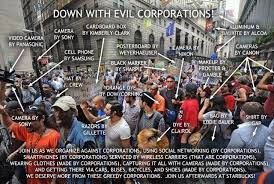
2. It's non-actionable.
What exactly would the occupiers do about the evil corporations? Regulate what they can pay their employees? How they can spend their money? How much profit they're entitled to earn?
Why yes, if you listen to many of the occupiers. They want public ownership of corporate assets. They want redistribution, Soviet-style. Never mind the experience of the last 80 years. Never mind the spectacular abuses and failures of centrally-planned economics.
3. It's narcissistic.
Many of the OWS protesters compare themselves to democracy activists in the middle east. America may have issues – we’ve got an overreaching security state, we waste tens of billions of dollars on a spectacularly failed war on drugs, we pay too much for middling health care outcomes, and we aren’t willing to tax ourselves enough to pay for all the goodies we want. But these issues are nothing - nothing - compared to what people in Egypt, Tunisia, Syria and Yemen faced or are facing.
It's embarrassing that the OWS crowd thinks getting jailed over a hippie campout is the moral equivalent of facing bullets while standing up for democracy in Cairo or Damascus.
4. It's entitled.
At the center of these complaints is a failure to take accountability. No one forced you to take out that over-leveraged mortgage, or go $100K in the hole to get a college degree. We all have choices, and we own the consequences of those choices. And don't forget that many of the problems plaguing our state and local governments stem from the rapacious appetite of government employee unions, and the failure of our leaders to protect taxpayers from the ruinous pension obligations they've signed up for.
Joe Biden said Occupy Wall Street is like the Tea Party. And he’s right. Just like the Tea Party – with its “keep your hands off my Social Security/but don’t tax us” message - OWS suffers from magical thinking in its muddled blend of tired lefty tropes.
Those of us in the reality-based community don't have patience for such indulgent, pointless crap.
Don't get me wrong - I like a good protest. Lock yourself to the gates of nuclear plant, protest the war, demand equal rights, whatever. But here are the problems I have with this protest:
1. It's infantile and wrong.
Have corporations visited these evils upon us? Of course they have. But corporations have also generated jobs, enabled innovation and powered an unprecedented increase in the standard of living for Americans. Corporations have developed the tools used by the protestors, and employ most of their parents, making it possible for them to protest. And let's face it: if all you want to do is run out a one-sided diatribe, a similar litany could be employed against labor unions, public school teachers, religions - or the entire human race.
2. It's non-actionable.
What exactly would the occupiers do about the evil corporations? Regulate what they can pay their employees? How they can spend their money? How much profit they're entitled to earn?
Why yes, if you listen to many of the occupiers. They want public ownership of corporate assets. They want redistribution, Soviet-style. Never mind the experience of the last 80 years. Never mind the spectacular abuses and failures of centrally-planned economics.
3. It's narcissistic.
Many of the OWS protesters compare themselves to democracy activists in the middle east. America may have issues – we’ve got an overreaching security state, we waste tens of billions of dollars on a spectacularly failed war on drugs, we pay too much for middling health care outcomes, and we aren’t willing to tax ourselves enough to pay for all the goodies we want. But these issues are nothing - nothing - compared to what people in Egypt, Tunisia, Syria and Yemen faced or are facing.
It's embarrassing that the OWS crowd thinks getting jailed over a hippie campout is the moral equivalent of facing bullets while standing up for democracy in Cairo or Damascus.
4. It's entitled.
At the center of these complaints is a failure to take accountability. No one forced you to take out that over-leveraged mortgage, or go $100K in the hole to get a college degree. We all have choices, and we own the consequences of those choices. And don't forget that many of the problems plaguing our state and local governments stem from the rapacious appetite of government employee unions, and the failure of our leaders to protect taxpayers from the ruinous pension obligations they've signed up for.
Joe Biden said Occupy Wall Street is like the Tea Party. And he’s right. Just like the Tea Party – with its “keep your hands off my Social Security/but don’t tax us” message - OWS suffers from magical thinking in its muddled blend of tired lefty tropes.
Those of us in the reality-based community don't have patience for such indulgent, pointless crap.
Tuesday, October 04, 2011
Do Female Lawyers Thrive In-House?
The ABA Journal asks the question of whether female attorneys are more successful in corporate jobs than in law firms due to corporations placing a higher value on female lawyers' "people skills."
The article then sloppily compares hard data (females comprising 15% of equity partners at large law firms) with anecdote ("some women lawyers are suggesting that female attorneys do better, overall, when working in-house").
Oh, but data's not hard to find. It turns out that of Fortune 500 General Counsel, women comprise (drum roll, please) . . .
18.8%
Huh. That's only slightly better than the equity partner rate.
Here's two things I know: First, people skills are important in corporations, far more so than in law firms. And second, there are plenty of attorneys with bad people skills. Lack of people skills is an equal-opportunity problem. It's why attorneys score in the 13th percentile for sociability (or as one managing partner at a large firm once told me, the 8th percentile if you control for rainmakers).
The data above would tell us that women lawyers have only marginally better people skills. And that margin could likely be explained away by the job style and hiring difference between equity partners and Fortune 500 GCs.
Can we stop falling back on counter-productive, fluffy gender stereotypes like "better people skills" - especially when the data doesn't bear them out?
The article then sloppily compares hard data (females comprising 15% of equity partners at large law firms) with anecdote ("some women lawyers are suggesting that female attorneys do better, overall, when working in-house").
Oh, but data's not hard to find. It turns out that of Fortune 500 General Counsel, women comprise (drum roll, please) . . .
18.8%
Huh. That's only slightly better than the equity partner rate.
Here's two things I know: First, people skills are important in corporations, far more so than in law firms. And second, there are plenty of attorneys with bad people skills. Lack of people skills is an equal-opportunity problem. It's why attorneys score in the 13th percentile for sociability (or as one managing partner at a large firm once told me, the 8th percentile if you control for rainmakers).
The data above would tell us that women lawyers have only marginally better people skills. And that margin could likely be explained away by the job style and hiring difference between equity partners and Fortune 500 GCs.
Can we stop falling back on counter-productive, fluffy gender stereotypes like "better people skills" - especially when the data doesn't bear them out?
Thursday, September 29, 2011
Bethesda vs. Minecraft

It's been a while since I've posted about trademark bullying, but Christ, it seems like it's everywhere. Proctor & Gamble is fighting with a Connecticut mom over the name she's chosen for her line of soap for tween girls ("Willa") because it sounds kinda like P&G's "Wella" brand. I've got some nimrod attorney demanding "one . . . MILLION . . . dollars" for using his name on our site (it's, uh, a legal directory. Of lawyers.).
But my new favorite for sheer cluelessness is Bethesda games going after Markus Persson, the creator of Minecraft. Bethesda worries that Persson's new game, Scrolls, might be confused with Bethesda's "Elder Scrolls" line of games. Never mind that no one would ever confuse one of Bethesda's games for one of Persson's. Or that the "Elder Scrolls" is a simply a postscript to the title of each Bethesda game.
What's really appalling here is how Bethesda is letting its lawyers crush them.
Despite possessing god-awful graphics, Minecraft is popular beyond belief. Offering up an open world with no structured gameplay, it provides a level of depth and creativity not found in any other game. Millions and millions and millions of people have flocked to it. My son and his friends are obsessed with it.
By going after Persson (who goes by "Notch"), Bethesda has aligned itself against all of these millions of ardent fans. It doesn't matter if they win the court battle and get Notch to change the name of the game; they've already lost the PR battle.
And of course, they didn't need to do this. Their lawyers may have told them that they need to "defend their intellectual property." That's bunk. Walking through all of the options and the PR implications of taking this action - particularly against a small or well-loved business - has got to factor into the equation.
I was talking to a video game journalist (!!) a few weeks back who told me that many of the gaming companies are known for being ineptly run. One sure-fire way to be run ineptly is to listen too uncritically to your lawyers. We'll see how much it costs Bethesda to learn that lesson.
Sunday, August 14, 2011
Politics and the Workplace
Several people wondered why I chose a political example for my post about negotiating with madmen. After all, conventional wisdom is that politics shouldn't be mixed with work, right?
And I think that point is correct - if your version of politics is the kind of single-issue advocacy, "principle-and-the-rest-be-damned" or magical thinking that seems to characterize so much of our political discourse. Best to keep it to yourself to avoid coming off as a crank, or someone with some gaping holes in their ability to reason.
But if you are someone who thinks about politics and policy, there's nothing like hashing those ideas out with others at work. Some of the most enjoyable and challenging political discussions I've had have come up this way. Why? Because in the workplace, you're more likely to run across smart people who are approaching these problems from a different perspective (as opposed to solving the world's problems for the umpteenth time with your like-minded college friends).
What's more, as our public political discourse has become more polarized, it's important that people call out the insanity. So to be clear: I don't consider the question of whether the Treasury needs to raise more revenue to be a political one. Rather, it's a self-evident proposition. Revenues are running at a level of GDP (15%) we haven't seen in 60 years. This low level of revenue is supporting a much greater swath of services than existed in the 1950's. While it is an equally self-evident proposition that entitlement spending needs to be cut, there's simply no way our modern industrial democracy can function the way Americans expect it to on a budget of 15% GDP. The political questions include how much revenue needs to be raised (and in what ratio to cuts in spending), in what form (higher taxes for the wealthy, comprehensive tax reform, etc.), and what the ultimate GDP target should look like (history and economics suggest 18-21%).
The grown-ups in the room know this and are asking these questions. There's a lot of work to be done to figure out what the ratio of revenue to cuts should be. My view is that it should be about a 1-2 or 1-3 ratio, but others I respect have suggested we could go as high as a 1-6 ratio.
So it was disappointing to see that every GOP candidate, when asked at last week's debate if they would support raising revenues at a 1-10 ratio of cuts, said they would not. That's not reality. It's not governing like an adult. We need to have a real discussion about how to change our tax code, raise more revenue, and make some fundamental changes (and cuts) to entitlement programs.
And there's no reason to rule out the workplace in having that discussion.
And I think that point is correct - if your version of politics is the kind of single-issue advocacy, "principle-and-the-rest-be-damned" or magical thinking that seems to characterize so much of our political discourse. Best to keep it to yourself to avoid coming off as a crank, or someone with some gaping holes in their ability to reason.
But if you are someone who thinks about politics and policy, there's nothing like hashing those ideas out with others at work. Some of the most enjoyable and challenging political discussions I've had have come up this way. Why? Because in the workplace, you're more likely to run across smart people who are approaching these problems from a different perspective (as opposed to solving the world's problems for the umpteenth time with your like-minded college friends).
What's more, as our public political discourse has become more polarized, it's important that people call out the insanity. So to be clear: I don't consider the question of whether the Treasury needs to raise more revenue to be a political one. Rather, it's a self-evident proposition. Revenues are running at a level of GDP (15%) we haven't seen in 60 years. This low level of revenue is supporting a much greater swath of services than existed in the 1950's. While it is an equally self-evident proposition that entitlement spending needs to be cut, there's simply no way our modern industrial democracy can function the way Americans expect it to on a budget of 15% GDP. The political questions include how much revenue needs to be raised (and in what ratio to cuts in spending), in what form (higher taxes for the wealthy, comprehensive tax reform, etc.), and what the ultimate GDP target should look like (history and economics suggest 18-21%).
The grown-ups in the room know this and are asking these questions. There's a lot of work to be done to figure out what the ratio of revenue to cuts should be. My view is that it should be about a 1-2 or 1-3 ratio, but others I respect have suggested we could go as high as a 1-6 ratio.
So it was disappointing to see that every GOP candidate, when asked at last week's debate if they would support raising revenues at a 1-10 ratio of cuts, said they would not. That's not reality. It's not governing like an adult. We need to have a real discussion about how to change our tax code, raise more revenue, and make some fundamental changes (and cuts) to entitlement programs.
And there's no reason to rule out the workplace in having that discussion.
Sunday, August 07, 2011
Negotiating with Madmen
Very few deals are truly "take it or leave it." And those that are require order-takers, not deal negotiators.
But every now and then, your counterparty to a negotiation will take this nutty "my way or the highway" position. Either because they misperceive their leverage, figure there's no cost in asking for the moon, or are just plain bonkers, they'll refuse to engage in the process of compromise that lies at the heart of every successful deal.
This isn't usually a very effective negotiating tactic. Experienced people will simply take the "highway" option, pack up and walk from the negotiation. And if you didn't really mean to give the ultimatum, and have to go crawling back to get talks going again, well . . . it's pretty obvious what that does to your negotiating leverage.
In order to do so, you've got to have an alternative - another competing deal, or a willingness to simply let a bad deal go by.
And this is what bothered me so much about the "debt limit deal" worked out between the White House and Congress. Obama assumed he was dealing with responsible counterparties, when he reality he had loonies on the other side of the table. Now, maybe the GOP wasn't really ready to let the US slip into default, but they certainly gave the impression of that - and in economic matters, impressions of what a government is capable of doing matter, a lot.
The first "my way or the highway" ultimatum was the GOP insistence that no deal for deficit reduction would involve increasing revenues. This should have been met with a response along the lines of "look - if you guys aren't going to take the business of governing seriously, these negotiations are over. I'm just going to ignore the debt limit and get back to work."
Messaging like that would have sparked outrage on the right of course, but it's a valid position both from a policy perspective (the debt limit conflicts with laws authorizing expenditures) and a strategic one (forcing the Republicans to choose between negotiating in good faith and going to court to force the US into default). But most importantly, it would have clarified the issues and let us know whether a meaningful deal could really be had.
Obama may have calculated that the threat of default was enough to restrain the right, and he may been correct, to a point. The problem is, all he could wring out with that weak piece of leverage was a face-saving mess of a deal that does little to address what's wrong with our economy. And we got it for the cost of undermining confidence in the United States.
It's an object lesson in the merits of sharpening the edges of a deal early on. But to do so, you've got to be willing to walk when the other side starts talking crazy.
But every now and then, your counterparty to a negotiation will take this nutty "my way or the highway" position. Either because they misperceive their leverage, figure there's no cost in asking for the moon, or are just plain bonkers, they'll refuse to engage in the process of compromise that lies at the heart of every successful deal.
This isn't usually a very effective negotiating tactic. Experienced people will simply take the "highway" option, pack up and walk from the negotiation. And if you didn't really mean to give the ultimatum, and have to go crawling back to get talks going again, well . . . it's pretty obvious what that does to your negotiating leverage.
In order to do so, you've got to have an alternative - another competing deal, or a willingness to simply let a bad deal go by.
And this is what bothered me so much about the "debt limit deal" worked out between the White House and Congress. Obama assumed he was dealing with responsible counterparties, when he reality he had loonies on the other side of the table. Now, maybe the GOP wasn't really ready to let the US slip into default, but they certainly gave the impression of that - and in economic matters, impressions of what a government is capable of doing matter, a lot.
The first "my way or the highway" ultimatum was the GOP insistence that no deal for deficit reduction would involve increasing revenues. This should have been met with a response along the lines of "look - if you guys aren't going to take the business of governing seriously, these negotiations are over. I'm just going to ignore the debt limit and get back to work."
Messaging like that would have sparked outrage on the right of course, but it's a valid position both from a policy perspective (the debt limit conflicts with laws authorizing expenditures) and a strategic one (forcing the Republicans to choose between negotiating in good faith and going to court to force the US into default). But most importantly, it would have clarified the issues and let us know whether a meaningful deal could really be had.
Obama may have calculated that the threat of default was enough to restrain the right, and he may been correct, to a point. The problem is, all he could wring out with that weak piece of leverage was a face-saving mess of a deal that does little to address what's wrong with our economy. And we got it for the cost of undermining confidence in the United States.
It's an object lesson in the merits of sharpening the edges of a deal early on. But to do so, you've got to be willing to walk when the other side starts talking crazy.
Tuesday, October 26, 2010
Reverse Synergies
Amazon’s acquisition of Woot! this past summer marked the all-time best letter from a CEO announcing his company’s acquisition, as well as the infamous “We Got Acquired by Amazon” sock puppet monkey video:
Lots of people love Woot; the attitude is fun and refreshing, and they DO have plenty of great deals. It’s not hard to see why Amazon saw an attractive acquisition opportunity.
One wonders, though, if the synergies analysis for the Woot acquisition included the impact on Amazon of having to remit sales tax in Texas (Woot is based in Austin). Because Texas just submitted a bill for $269 million. That’s a heckuva lot more than what Amazon reportedly paid for Woot.
In fairness, this is the culmination of a long-running dispute between Amazon and Texas over sales taxes. But owning Woot sure isn’t going to help Amazon’s argument that it’s not responsible for remitting Texas sales tax.
Whoops.
Lots of people love Woot; the attitude is fun and refreshing, and they DO have plenty of great deals. It’s not hard to see why Amazon saw an attractive acquisition opportunity.
One wonders, though, if the synergies analysis for the Woot acquisition included the impact on Amazon of having to remit sales tax in Texas (Woot is based in Austin). Because Texas just submitted a bill for $269 million. That’s a heckuva lot more than what Amazon reportedly paid for Woot.
In fairness, this is the culmination of a long-running dispute between Amazon and Texas over sales taxes. But owning Woot sure isn’t going to help Amazon’s argument that it’s not responsible for remitting Texas sales tax.
Whoops.
Friday, August 13, 2010
Vote on Oracle's Next Meal
The beast from Menlo Shores has an insatiable appetite, gobbling up companies large and small. Notables like Peoplesoft and Sun Micro have fallen to Larry Ellison's behemoth in recent years - so who's next?
Stephen Jannise, an ERP software analyst who follows Oracle, has taken a stab at answering that question, and invites your vote on who Oracle is likely to next set its hooded gaze upon.
Stephen Jannise, an ERP software analyst who follows Oracle, has taken a stab at answering that question, and invites your vote on who Oracle is likely to next set its hooded gaze upon.
Monday, August 02, 2010
Another GC Weighs in on Outside Counsel
Great post from Richard Russeth: "If Nordstrom's Was A Law Firm, I'd Give Them All My Business: 7 Mistakes To Avoid With Your In-House Client."
Terrific advice for attorneys seeking long-term corporate clients, or wondering why their clients tend to "stray." I would overlay this with previous points I've made about the importance of outside counsel offering business-focused advice, but these issues of responsiveness are so important - and such low-hanging fruit - that it's surprising more attorneys can't figure them out. I especially like rule #5.
Terrific advice for attorneys seeking long-term corporate clients, or wondering why their clients tend to "stray." I would overlay this with previous points I've made about the importance of outside counsel offering business-focused advice, but these issues of responsiveness are so important - and such low-hanging fruit - that it's surprising more attorneys can't figure them out. I especially like rule #5.
Friday, July 02, 2010
Deal Deliberations
Fred Wilson has a post up regarding Foursquare's recent funding round, defending the lengthy process taken by the startup. What started as financing discussions turned into acquisition talks, then ultimately returned to financing as Foursquare decided they'd rather grow organically than cash out now.
That's a respectable, even admirable, choice. It's not without risk, but it's good to see a company swing for the fences. And while I have often urged the virtues of speed in getting deals done, I agree with Fred that Foursquare did the right thing in taking their time through this process.
The distinction lies between the time taken to evaluate alternatives and the time taken to button the deal up once the company has made its choice. During the evaluation/auction phase, the risks of waiting are likely to be heavily outweighed by the benefits of seeing things through. That may mean getting to the best acquisition deal, or arriving at the informed decision to move forward alone (or with new financing).
However, it's once that decision has been made that things need to be moved forward with haste. Even if you haven't chosen your partner and an auction still persists, once the decision to do one type of deal or another is in place it's time to race for the finish. Why? Because at this point the risk scenario is flipped. The risks attendant with delay - new competitors emerging, changes in the macro environment, etc. - strongly outweigh any potential benefits of waiting. This doesn't mean not negotiating hard, but it does mean not allowing any delay due to lawyerly handwringing or people not being willing to work around the clock to get the deal papered.
Or as someone else put more memorably: "Only one thing matters in this life: Get them to sign on the line that is dotted."
I don't know how long it took Foursquare to get their financing closed once they'd made the decision to go that route, but if it took more than a couple of weeks that would be cause for criticism.
Not, however, the time they took to reflect on their options and make the choice between selling now and moving forward independently.
That's a respectable, even admirable, choice. It's not without risk, but it's good to see a company swing for the fences. And while I have often urged the virtues of speed in getting deals done, I agree with Fred that Foursquare did the right thing in taking their time through this process.
The distinction lies between the time taken to evaluate alternatives and the time taken to button the deal up once the company has made its choice. During the evaluation/auction phase, the risks of waiting are likely to be heavily outweighed by the benefits of seeing things through. That may mean getting to the best acquisition deal, or arriving at the informed decision to move forward alone (or with new financing).
However, it's once that decision has been made that things need to be moved forward with haste. Even if you haven't chosen your partner and an auction still persists, once the decision to do one type of deal or another is in place it's time to race for the finish. Why? Because at this point the risk scenario is flipped. The risks attendant with delay - new competitors emerging, changes in the macro environment, etc. - strongly outweigh any potential benefits of waiting. This doesn't mean not negotiating hard, but it does mean not allowing any delay due to lawyerly handwringing or people not being willing to work around the clock to get the deal papered.
Or as someone else put more memorably: "Only one thing matters in this life: Get them to sign on the line that is dotted."
I don't know how long it took Foursquare to get their financing closed once they'd made the decision to go that route, but if it took more than a couple of weeks that would be cause for criticism.
Not, however, the time they took to reflect on their options and make the choice between selling now and moving forward independently.
Wednesday, June 23, 2010
Straight Outta Law School
Hewlett Packard is now experimenting with hiring in-house counsel directly out of law school. It's an unorthodox move, but makes sense for a company of HP's size. They've got the volume of grunt legal work that a first year is suited to do, and enough senior counsel to provide training. Most importantly, they are assured of getting new hires who are untainted by time spent toiling in the risk-adverse halls of big law firms.
Sounds like good news for these lucky hires and their internal clients at HP.
Sounds like good news for these lucky hires and their internal clients at HP.
Wednesday, June 16, 2010
The Perils of Hyperbole
First of all, has it really been three months since I've posted here? Between being crazy-busy and writing elsewhere I've neglected Corporate Tool. But fear not - this post from What About Clients? today reminded me of how hyperbole, attractive though it might be, is to be avoided like the plague in both litigation and business.
Dan Hull is absolutely right about the corrosive effect hyperbole has on one's credibility as a litigator; how a single overstatement can undermine an entire legal brief. It's simple, really: Lie about one thing, and people won't believe you about anything.
The corollary in business is this: If you're going to overstate your position, make threats or engage in brinkmanship, you'd better be prepared to back it up. Unless you're really ready to walk from the negotiating table, bring a lawsuit or take some other decisive action, such bombast is likely to seriously backfire. Empty threats are almost never successful.
Dan Hull is absolutely right about the corrosive effect hyperbole has on one's credibility as a litigator; how a single overstatement can undermine an entire legal brief. It's simple, really: Lie about one thing, and people won't believe you about anything.
The corollary in business is this: If you're going to overstate your position, make threats or engage in brinkmanship, you'd better be prepared to back it up. Unless you're really ready to walk from the negotiating table, bring a lawsuit or take some other decisive action, such bombast is likely to seriously backfire. Empty threats are almost never successful.
Thursday, March 18, 2010
Avvo Series C

I do a wide variety of things here at Avvo, from talking to angry attorneys to fetching drinks for our Friday beer gardens. Over the last week, I've been back in deal mode, wrapping our Series C financing - a $10MM round lead by DAG Ventures, joined by our existing investors Benchmark Capital and Ignition Partners.
Compared to M&A, negotiating a C round venture investment isn't exactly exciting (although it does generate a lot more paper). We kept this one hopping by closing in record time - 9 days from term sheet to close. Kudos to our great investors, DAG's counsel at Cooley and our attorneys at Perkins for moving this thing along so quickly. We're awfully excited about what the next year has in store for us.
Friday, February 19, 2010
Like Hogs to the Slaughter
One pig-meat conglomerate buying another isn't typically my stock in trade, but I was intrigued by the recent news of the DOJ levying a $900K fine against Smithfield Farms for gun-jumping in its acquisition of Premium Standard Farms. Root of the problem? During the pre-close HSR waiting period, Premium Standard had submitted several long-term contracts for hog supply to Smithfield for review and approval. Sooey!
While the amount of the fine isn't huge (representing little more than one-tenth of one percent of the $810 million Smithfield paid), what's interesting is how after-the-fact it was. The deal closed nearly 3 years ago.
Lesson one, which isn't really a lesson, because both parties should have known better: Don't ask your acquiror to sign off on ordinary course contracts, even if they ARE large and DO extend beyond the closing date. Aside from the gun jumping risk, there are also significant benefits to the seller in maintaining its operational independence while awaiting the close (optionality in the event the deal goes south; additional motivation for the buyer to close quickly). And while the buyer's interest in making sure it's not saddled with non-economic contracts is obvious, tight operating covenants are a better solution than trying to assert de facto operating control pre-close.
Lesson two: Don't expect that closing the deal is the end of your dealings with the DOJ. If you haven't run a clean process, don't be surprised if the feds come calling long after the closing dinner is a distant memory.
While the amount of the fine isn't huge (representing little more than one-tenth of one percent of the $810 million Smithfield paid), what's interesting is how after-the-fact it was. The deal closed nearly 3 years ago.
Lesson one, which isn't really a lesson, because both parties should have known better: Don't ask your acquiror to sign off on ordinary course contracts, even if they ARE large and DO extend beyond the closing date. Aside from the gun jumping risk, there are also significant benefits to the seller in maintaining its operational independence while awaiting the close (optionality in the event the deal goes south; additional motivation for the buyer to close quickly). And while the buyer's interest in making sure it's not saddled with non-economic contracts is obvious, tight operating covenants are a better solution than trying to assert de facto operating control pre-close.
Lesson two: Don't expect that closing the deal is the end of your dealings with the DOJ. If you haven't run a clean process, don't be surprised if the feds come calling long after the closing dinner is a distant memory.
Monday, February 01, 2010
Thoughts on Daily Bike Commuting
 I starting riding to work about 18 months ago, right after moving from Redmond to Seattle. A fair weather rider at first, I quickly grew to love the feeling of riding to work. From the exhilarating wakeup of flying downhill in the morning to the mind-cleansing burn of pedaling uphill on the way home, I was hooked. I've moved steadily onward to riding nearly every work day. I rode 180 days in 2009, and would have reached 200 if a mid-April sandboarding accident hadn't sidetracked me for 6 weeks with a broken foot.
While I certainly encourage others to "bike their drive," I'll be the first to acknowledge that my situation is about as perfect as it could be for bike commuting. At only 3.5 - 4 miles each way, riding doesn't take any more time than driving, and is way faster than the bus. Parking a car in my building costs $200 a month. My ride is entirely urban, so I'm not (often) dealing with speeding vehicles. With my morning ride almost all downhill, I don't work up a sweat on the way in. My workplace is very casual, so I can ride in my street clothes. Remove any of these factors and who knows how resolved I'd be?
In any event, the last year has been about removing obstacles to riding. The first of these was heavy rain, which for the first six months of riding kept me off my bike. Quality raingear (including these butt-ugly but effective shoe covers) solved that problem, and I now look forward to riding in the rain. I've also added a Cetma rack up front so I can carry bulky items to and from work and run more errands on my bike.
 I've probably reached the maximum potential for riding - business travel, speeches and meetings still conspire to keep me off my bike a few weeks each year, and I won't ride in the snow, given the steepness of my hill and how clueless Seattle drivers are at operating in the stuff. I could get another bike, so mechanical problems - which cost me a handful of rides - aren't a factor. But that's probably more just rationalization for me to get this sweet lime-green Swobo.
Wednesday, January 13, 2010
Useless Corporate Lawyers?
Yes, I've known a few . . . enjoyed this brief post from What About Clients, reminding all attorneys out there to quit wringing their hands and give their clients some freaking actionable advice for a change. Also links to WAC's classic "7 Habits of Highly Useless Corporate Lawyers" post.
Thursday, January 07, 2010
Getting Help with the Deal
Good post over at Venture Hacks from Scott Walker - 5 tips on getting deals closed. Here they are, with my thoughts on each:
1. Create a competitive environment. Absolutely. As I wrote about in documenting the sale of AT&T Wireless, a competitive environment drives price and terms in the seller's favor. The only thing better than telling one group that their legal ask is "no longer market" is getting a call from another that they are raising their offer. But - I would emphasize Scott's advice that this effort is one where you must have experienced help. It is a very delicate process to get an auction going and keep it alive, and not a place for any entrepreneur or business manager to learn on the job.
2. Leave your heart at home. Listen, listen, listen - and always check yourself for signs of deal fever.
3. Work your balls off. True for getting most businesses to succeed, and true in the crunch time of getting a deal done. Work 40 hours over a weekend to get a deal done while markets are closed? Spend a week in New York without eating a meal outside of a law firm conference room? You bet - everything needs to fall away when you're focused on getting the deal done.
4. Don't let your investors screw you. Doing diligence is always important - but requires focus. Pay attention to tone and priorities. Don't pay attention to things that don't make a material difference.
5. Get good legal help. God know I've spent a lot of time on this blog dealing with the failings of lawyers, and much of my deal experience has come as a principal rather than the lawyer on the deal. That said, you need to get someone who matches your energy and willingness to work your balls off, AND who knows your business and is aligned with your level of risk aversion. I've seen a lot of good lawyers blow (or nearly blow) deals by wasting time on marginal legal issues. Make sure your lawyer can tell the difference between what matters to you and what can be moved past.
1. Create a competitive environment. Absolutely. As I wrote about in documenting the sale of AT&T Wireless, a competitive environment drives price and terms in the seller's favor. The only thing better than telling one group that their legal ask is "no longer market" is getting a call from another that they are raising their offer. But - I would emphasize Scott's advice that this effort is one where you must have experienced help. It is a very delicate process to get an auction going and keep it alive, and not a place for any entrepreneur or business manager to learn on the job.
2. Leave your heart at home. Listen, listen, listen - and always check yourself for signs of deal fever.
3. Work your balls off. True for getting most businesses to succeed, and true in the crunch time of getting a deal done. Work 40 hours over a weekend to get a deal done while markets are closed? Spend a week in New York without eating a meal outside of a law firm conference room? You bet - everything needs to fall away when you're focused on getting the deal done.
4. Don't let your investors screw you. Doing diligence is always important - but requires focus. Pay attention to tone and priorities. Don't pay attention to things that don't make a material difference.
5. Get good legal help. God know I've spent a lot of time on this blog dealing with the failings of lawyers, and much of my deal experience has come as a principal rather than the lawyer on the deal. That said, you need to get someone who matches your energy and willingness to work your balls off, AND who knows your business and is aligned with your level of risk aversion. I've seen a lot of good lawyers blow (or nearly blow) deals by wasting time on marginal legal issues. Make sure your lawyer can tell the difference between what matters to you and what can be moved past.
Subscribe to:
Posts (Atom)